When we ran 270 AI search queries across ChatGPT and Perplexity for this year’s Tri-Cities study, one variable predicted AI visibility better than schema, website health, or GBP completeness. It was review count. Not by a little. The gap between businesses with 100+ reviews and businesses with fewer than 20 was the clearest pattern in the entire dataset.
This post breaks down exactly what the data showed, tier by tier, and what it means for home service businesses trying to build AI search visibility in 2026 and beyond.
Table of Contents
The Numbers, Straight
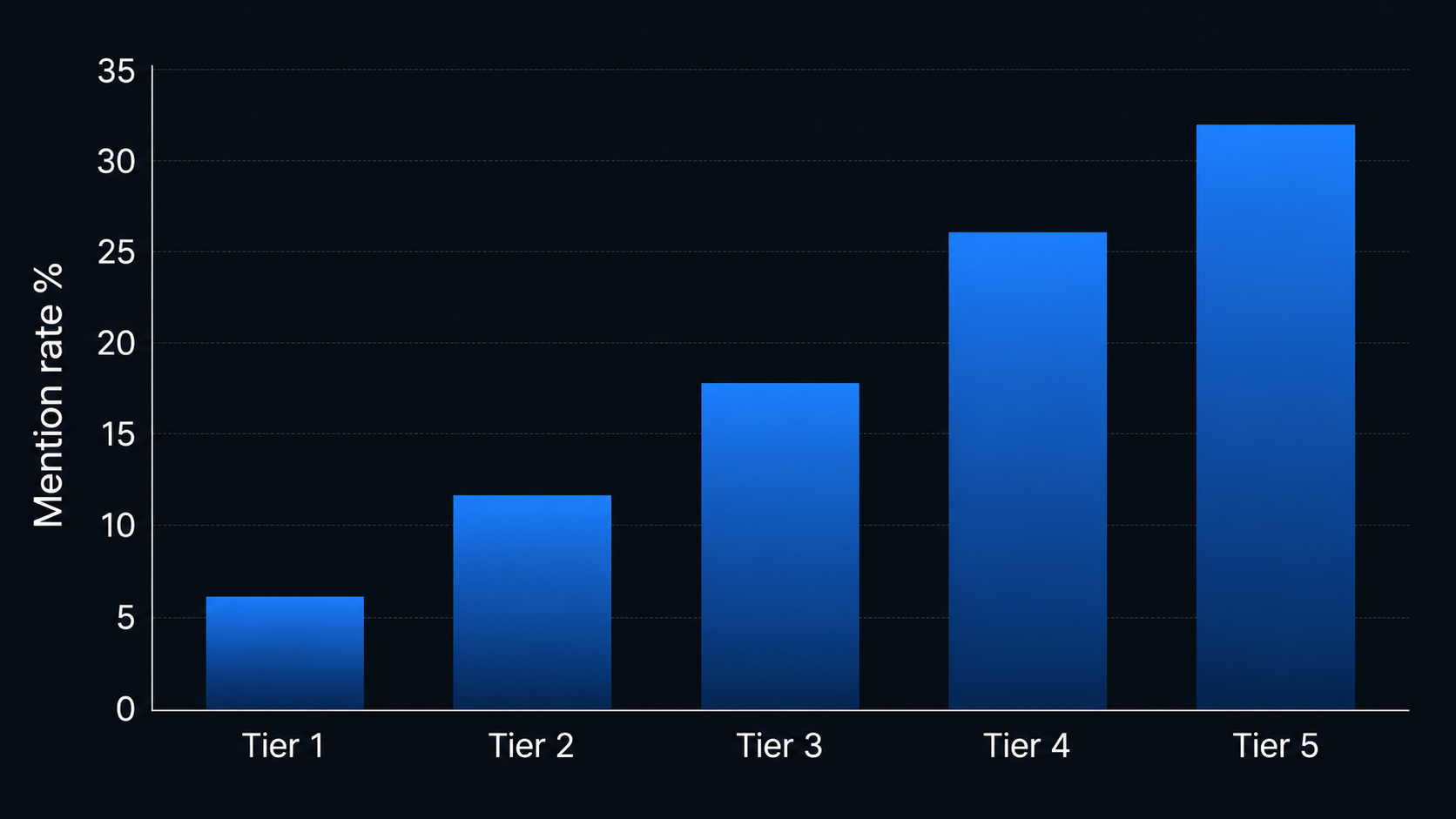
We audited 68 home service businesses across the Tri-Cities (HVAC, plumbing, electrical, roofing, tree service) and matched their AI mention results against their Google review counts. Five tiers:
| Google Review Count | AI Mention Rate | Sample (n) |
| 200+ reviews | 69% | 9 of 13 |
| 100–199 reviews | 79% | 11 of 14 |
| 50–99 reviews | 50% | 6 of 12 |
| 20–49 reviews | 38% | 6 of 16 |
| Fewer than 20 | 11% | 1 of 9 |
The 100–199 tier had the highest mention rate in the study at 79%. Businesses with 200+ reviews came in at 69%, which likely reflects that high-review businesses in this market span a wider quality range. The drop below 50 reviews is steep: from 50% to 38% to 11%.
| Businesses with 100–199 Google reviews were mentioned by AI 79% of the time. Businesses with fewer than 20 were mentioned 11% of the time. |
What This Actually Means
AI platforms like ChatGPT and Perplexity don’t scrape Google Maps directly when you ask them for a local contractor. They pull from indexed web content: directories, review platforms, local news mentions, and GBP data embedded across the web. A business with 150 Google reviews has had its name, category, and service area indexed across dozens of those sources. A business with 12 reviews hasn’t.
Review count is a proxy for web presence depth. More reviews means more indexed mentions across more sources, which means more material for an AI to cite when it generates a local recommendation. The AI isn’t voting on quality. It’s surfacing businesses that appear frequently in its training data and live search results.
| From the 2026 Tri-Cities AI Search Visibility Study Average Google review count for AI-mentioned businesses: 394 Average Google review count for businesses not mentioned: 72 Source: 68 home service businesses audited across Johnson City, Kingsport, and Bristol TN Full methodology at 1-find.agency/resources/2026-tri-cities-ai-visibility-study |
The 50-Review Floor and the 100-Review Target
The data points to two practical numbers.
50 reviews is where mention rate crosses from low to moderate. Below 50, businesses in this study were mentioned 11–38% of the time. At 50 reviews, the rate jumps to 50%. Getting to 50 reviews is the first meaningful threshold.
100 reviews is where mention rate crosses into high territory. The 100–199 tier hit 79%. That’s the number worth targeting as a medium-term goal. For most home service businesses in a market like the Tri-Cities, 100 reviews is achievable within 12–18 months with a consistent ask process.
| Getting to 100 reviews doesn’t guarantee AI visibility. It puts you in the pool of businesses AI platforms will consider when generating local recommendations. |
What the Data Says Doesn’t Drive AI Visibility
Two things that SEO advice commonly emphasizes showed almost no correlation with AI mention rate in this study.
Schema markup
Businesses with LocalBusiness schema were mentioned 49% of the time. Businesses without it were mentioned 52% of the time. The difference is within noise. Schema matters for other reasons, but in this dataset it didn’t predict AI visibility.
There’s a confounding factor worth noting: businesses with schema in this study averaged 357 Google reviews, while businesses without schema averaged 104. Schema adoption and review count are correlated. The schema group’s slightly lower mention rate may reflect that many schema adopters are newer or more technically-oriented businesses, not necessarily high-review ones.
Website technical health
AI-mentioned businesses averaged a website health score of 66.7 out of 100. Businesses not mentioned averaged 63.8. A difference of less than 3 points across 68 businesses. Website quality matters for ranking in traditional search, but AI recommendation platforms are pulling from a wider signal set than your Lighthouse score.
Three Things Worth Doing If You’re Under 50 Reviews
If you’re a home service business in the Tri-Cities (or anywhere, frankly) with fewer than 50 Google reviews, the highest-leverage activity for AI search visibility is review velocity, not schema work or a website rebuild.
- Ask at the close of every job. The most reliable way to build reviews is a systematic ask at the moment of job completion, when the customer is satisfied and your team is still present. A text message with a direct review link sent within an hour of finishing the job converts better than any follow-up email.
- Make the ask frictionless. Send a link directly to your Google review page, not to Maps generally. Every extra step loses people. Most review management platforms (including GHL) can automate this with a short workflow triggered by job status change.
- Respond to every review. Responses increase the volume of indexed text associated with your business. A business with 80 reviews and 80 responses has twice as much indexed content as one with 80 reviews and no responses. Google’s own guidance recommends responding to all reviews.
One Finding About Google That Changes the Equation
The AI visibility study included Google AI Overviews as one of the three platforms tested. The result: Google generated zero AI Overviews across 135 home service queries in the Tri-Cities. Every query returned a local pack, local service ads, or standard organic results.
For Google specifically, traditional local SEO, review count, and GBP completeness remain the primary drivers of visibility because Google isn’t serving AI-generated answers for these queries at all. The review count threshold matters most for ChatGPT and Perplexity, where AI-generated local recommendations are already routine.
| See the Full Study The 2026 Tri-Cities AI Search Visibility Study covers 270 queries across three platforms, with business-level data and cross-reference against website health and GBP scores for 68 home service companies. Read the full research at 1-find.agency/resources |