A guy running a fleet graphics and truck wrap shop that’s been around for fifty years asked me once how a small, old-school business builds an online presence without a marketing team. He was doing sales, production, and marketing, all at once, with no time to spare.
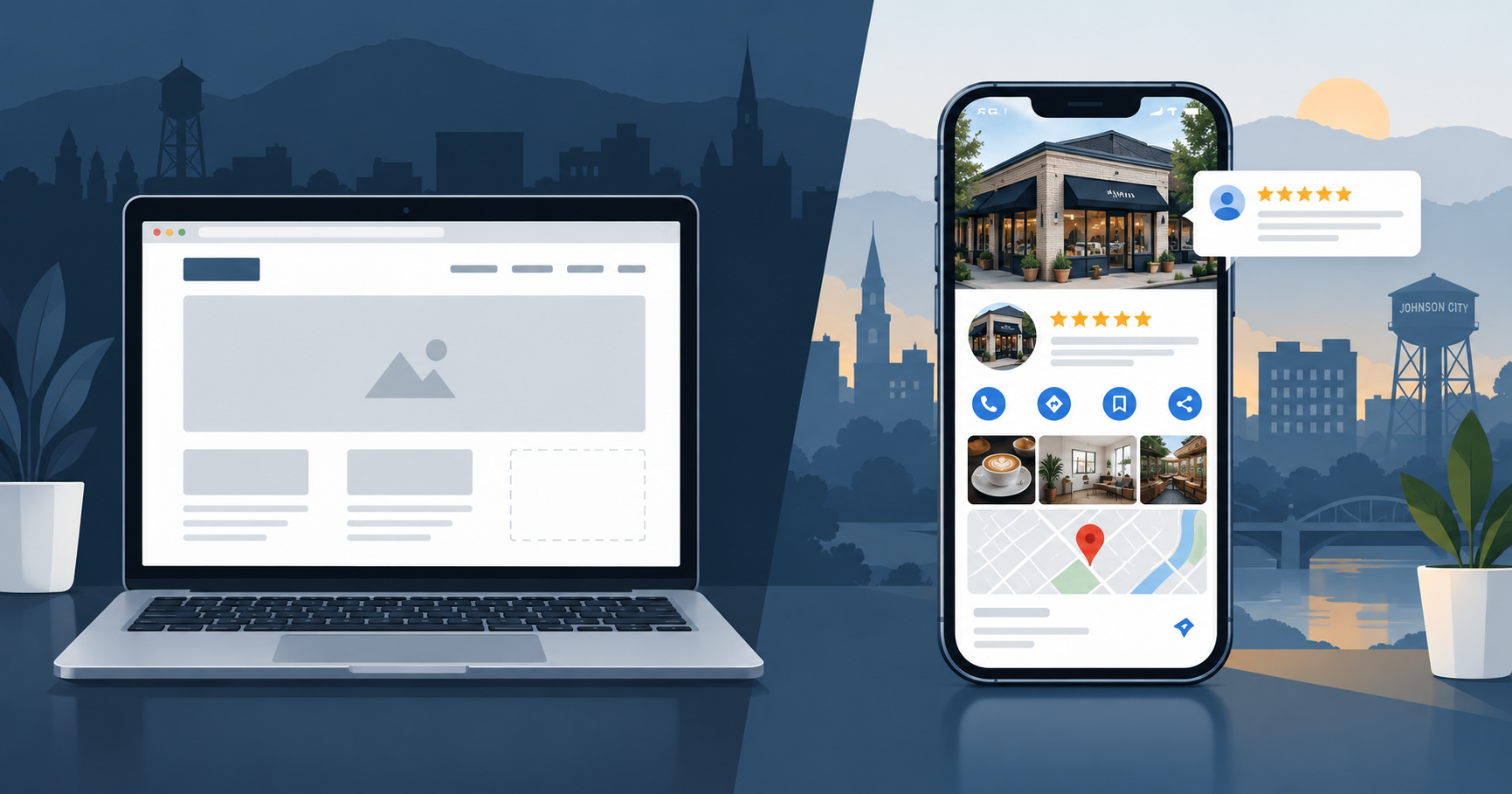
The answer I gave him didn’t involve a full website overhaul, a blog, or a six-figure budget. It came down to four things done well and repeated: a Google Business Profile treated like a second homepage, one solid page per service instead of a generic “services” page, real job photos instead of stock images, and a review ask that happens the moment the job is done, not “sometime.”
If you’re a Johnson City service business deciding whether to build your own site or hire someone, that’s the actual answer. It’s less about DIY versus hiring, and more about which four things get done consistently, regardless of who does them.
What the DIY path actually gets right, and where it breaks down
Website builders have gotten genuinely capable. For a basic site with your services, hours, and contact info, DIY is a reasonable starting point, especially if money is tight and time is the more available resource.
Where it falls apart is scope creep and neglect. A site gets built once, launched, and never touched again, while the Google Business Profile that actually drives local visibility gets set up once and forgotten. The businesses that struggle most aren’t the ones who built their own site, they’re the ones who treated the website as the finish line instead of one piece of an ongoing system.
Another trap: chasing tactics instead of fundamentals. Owners short on time often start five channels at once, blog, social, ads, SEO, a new site, and finish none of them well. Pick four boring things and do them consistently for 90 days before adding anything new.
What hiring someone actually solves
The value of hiring a designer isn’t magic, it’s mostly consistency and knowing what matters versus what’s a waste of time. A website builder can’t tell you that a service-specific page outperforms a generic “our services” page, or that alt text needs to describe the image first and chase keywords second. That’s judgment, not software.
The other thing hiring solves is time. If you’re the one person handling sales, production, and marketing, the honest tradeoff isn’t “can I technically do this myself,” it’s “will this actually get done if it’s the fifth thing on my list.” A 90-day plan that never gets past week two isn’t a plan, it’s a backlog.
Mistakes I see, regardless of who builds the site
Treating the website like a brochure instead of a lead generator. A generic “services” page that lists everything in one paragraph performs worse than a dedicated page per service, because it gives search engines and customers nothing specific to match against what they’re actually searching for.
Skipping the Google Business Profile. This is the single highest-visibility, lowest-cost piece of the puzzle, and it’s the first thing that gets neglected once a website launches.
Asking for reviews too late, or not asking at all. Ask within 24 hours of the job being done, while the result is still in front of the customer, not with a vague “leave us a review sometime” months later.
Not tracking where leads actually come from. Whether it’s a call from Google Maps, a form fill, or a referral, businesses that don’t track lead sources end up guessing at what’s working instead of knowing.
A realistic 90-day plan for either path
Whether you build it yourself or hire someone, here’s the sequence I’d run.
- Claim and fully complete your Google Business Profile. Every service listed as its own category, accurate hours and service area, and a weekly habit of adding a new job photo.
- Build one page per money service, not one generic services page. Each page names the service, the areas you cover, and shows real project photos, not stock imagery.
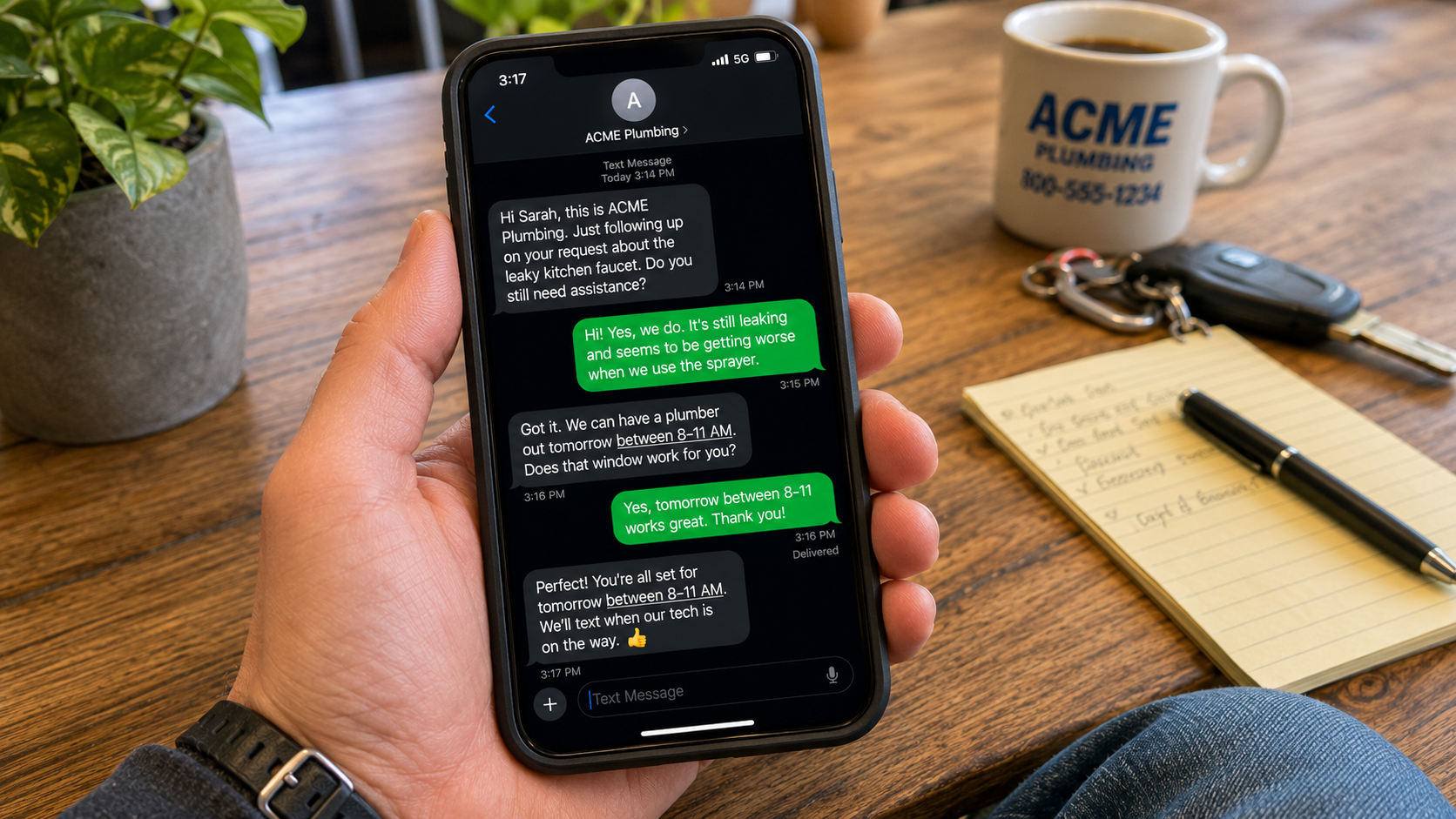
- Put a review ask into your actual workflow. A text or email sent within 24 hours of job completion, with a direct link, consistently outperforms an occasional verbal request.
- Track every lead source for 60 days. Even a simple spreadsheet noting where each call or form came from tells you more than any tool you could buy.
- Keep your name, address, and phone number identical everywhere: your website, Google, Facebook, and any directories you’re listed on. Inconsistency here quietly undercuts everything else.
None of this requires a marketing team. It requires picking a short list and finishing it before moving to the next thing.
Where a local designer earns their fee
The honest case for hiring isn’t that you can’t build a website yourself. It’s that the businesses getting results are the ones treating their online presence as an ongoing system, not a one-time project, and most owners running the shop don’t have the bandwidth to be that system’s maintenance crew on top of everything else.
I put together a web design cost breakdown for Johnson City if you want real numbers before deciding either way. And if you’d rather have someone who already knows which four things matter build and maintain that system for you, that’s what my web design work covers, site and Google Business Profile together, so nothing falls through the gap between “the site is done” and “the site is actually working.”
Should I build my own website or hire someone in Johnson City?
If you have real time to maintain it consistently, especially your Google Business Profile and service pages, DIY is workable. If your time is better spent running the business, hiring someone to build and maintain both together usually pays for itself faster than a self-built site that gets set up once and forgotten.
What matters more, the website or the Google Business Profile?
For a local service business, the Google Business Profile is usually the higher-payoff asset because it’s free, shows up directly in local search and maps, and can be kept current with weekly photos and review responses. The website matters too, but a neglected site with an actively managed profile still tends to outperform a polished site with a stale profile.
How often should I ask customers for reviews?
Right after the job is finished, while the result is still visible, not weeks later. A direct text or email link works better than a verbal ask, and doing this consistently matters more than any single tactic.