If you’ve ever searched “dentist near me” on Google, you know exactly what the competition looks like. Three practices appear in a prominent map block at the top of the results. Below that, there’s a longer list of organic results. Most of the clicks, and most of the new patient calls, go to those top three.
That map block is called the Local Pack, or more commonly the Map Pack. And for most dental practices, it’s the most valuable piece of search real estate that exists.
Here’s the problem: the majority of dental SEO advice on the internet is written about the wrong thing. It covers how to rank in organic search results, which are the blue links below the map, using strategies built for informational websites and e-commerce stores. Organic SEO and Map Pack SEO share some overlap, but they’re driven by meaningfully different signals. A practice that invests heavily in traditional SEO tactics and neglects the factors that actually move Map Pack rankings is likely spending money in the wrong place.
This post is specifically about the Map Pack, what drives it, and how most dentists are doing SEO wrong.
Table of Contents
The Map Pack and Organic Results Are Not the Same Race
Before getting into tactics, it’s worth being precise about what you’re actually optimizing for, because the confusion between these two surfaces causes a lot of wasted effort.
When someone searches “dentist Johnson City” or “dental implants near me,” Google typically shows results in this order: sometimes a small paid ads block, then the Map Pack showing three local practices with ratings and a map, then the organic results below.
The Map Pack is powered primarily by your Google Business Profile (formerly Google My Business) and the signals surrounding it. The organic results below it are powered by your website’s content, authority, and technical SEO.
They’re connected, but they’re not the same thing. A practice with a mediocre website can still win the Map Pack with a strong Google Business Profile, consistent citations, and good review signals. Conversely, a practice with a beautifully optimized website can be absent from the Map Pack entirely if their Google Business Profile is neglected.
Most dental SEO checklists treat these as one unified strategy. They’re not, and understanding the distinction is the starting point for investing in the right things.
What Actually Determines Map Pack Rankings
Google has published guidance on what drives Local Pack rankings, and it comes down to three core factors: relevance, distance, and prominence.
Relevance is whether your business matches what the searcher is looking for. This is influenced by how completely and accurately your Google Business Profile is filled out, the categories you’ve selected, the services you’ve listed, and the keywords that appear in your reviews and business description.
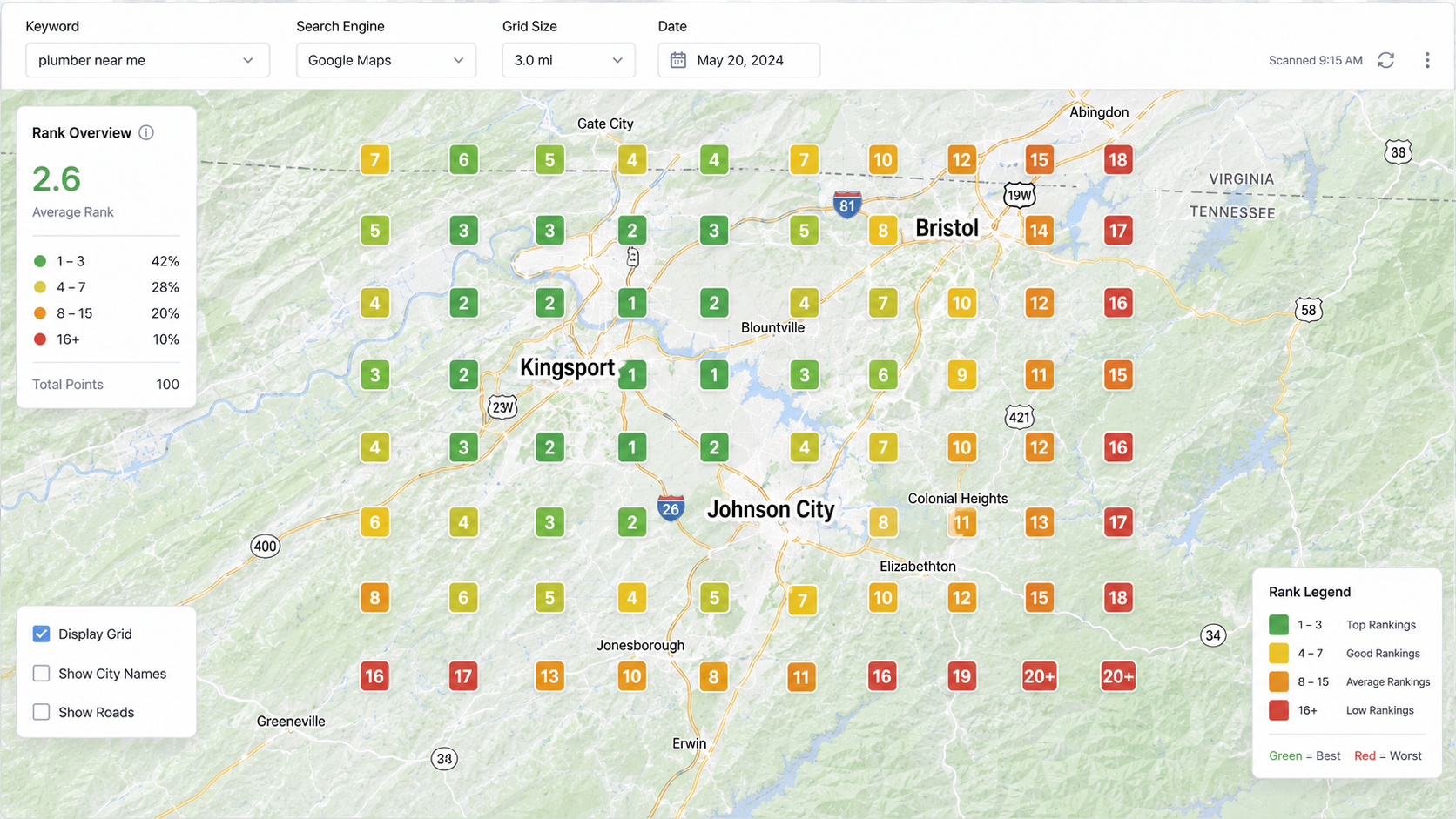
Distance is how close your practice is to the searcher or to the location they specified. This is largely outside your control, but it’s why a practice in downtown Johnson City will naturally appear for searches in that area and may not appear for searches from someone in Kingsport. You optimize around distance rather than fighting it.
Prominence is the factor with the most room to influence, and it’s where most practices either win or lose. Prominence refers to how well-known and trusted Google considers your practice to be. It’s driven by the volume and quality of your reviews, the consistency of your business information across the web, links and mentions from other websites, and the overall activity and completeness of your Google Business Profile.
When two practices are equally relevant and equidistant from a searcher, prominence is what separates the one that appears in the Map Pack from the one that doesn’t.
The Four Things That Move Map Pack Rankings for Dental Practices
1. Google Business Profile Completeness and Activity
Most practices claim their Google Business Profile, fill in the basics, and never touch it again. That’s a significant missed opportunity, because Google treats your profile as a living document, and practices that treat it that way tend to rank better than those that don’t.
Completeness matters. Every section of your profile that sits empty is a missed relevance signal. This includes your services list, with individual entries for general dentistry, cosmetic dentistry, teeth whitening, dental implants, Invisalign, and whatever else you offer. It includes your business attributes, your Q&A section, and your business description, which should incorporate the services and location naturally without reading like a keyword list.
Activity also matters. Google Business Profiles that are regularly updated with posts, new photos, and responses to reviews signal an active, legitimate business. Profiles that haven’t been touched in two years signal the opposite. Posting once or twice a month, adding fresh photos of the practice and staff, and responding to every review are low-effort habits that compound into a meaningful ranking advantage over practices that treat the profile as a one-time setup task.
One commonly neglected feature: the Services section. Most dental practices list “General Dentistry” as a single entry. Breaking this into individual services, each with a description, gives Google far more signal about what your practice offers and helps you appear for specific procedure searches like “dental crown Johnson City” or “teeth cleaning near me” in addition to the broader “dentist near me” queries.
2. Review Volume, Velocity, and Recency
Reviews are the most visible prominence signal and one of the most impactful ranking factors in the Map Pack. Google weighs not just how many reviews you have, but how recently you’ve been receiving them.
A practice with 200 reviews accumulated over eight years, with none in the past six months, will typically rank below a practice with 80 reviews that has been consistently receiving new ones every week. Recency signals an active, currently-operating business. Staleness signals the opposite.
This has a practical implication that most practices miss: review generation needs to be a continuous process, not a campaign you run once. Building it into the patient checkout experience, whether through a follow-up text message, an email, or a simple verbal ask at the front desk, is more effective than periodic pushes that generate a burst of reviews and then go quiet.
The content of reviews also matters for relevance. When patients mention specific procedures (“the crown came out perfectly”), specific staff members, or location references (“easy to find on State of Franklin Road”), those keywords become part of your profile’s relevance signals. You can’t script reviews, but you can create conditions where patients naturally mention the things that matter.
One critical note: never purchase reviews, offer incentives for reviews, or post fake reviews. Google’s systems are increasingly sophisticated at detecting inauthentic review patterns, and the penalty, removal from the Map Pack entirely, is not worth the short-term gain.
3. Citation Consistency
A citation is any online mention of your practice’s name, address, and phone number. These appear in directories like Yelp, Healthgrades, Zocdoc, the American Dental Association’s finder, local Chamber of Commerce listings, and dozens of other places.
Google cross-references these citations to verify that your business information is accurate and consistent. Inconsistencies, a different phone number on Yelp than on your website, an old address still listed on a directory you set up six years ago, a slightly different business name format on different platforms, create conflicting signals that undermine your prominence score.
For dental practices specifically, healthcare directories carry additional weight because they’re considered authoritative sources in the medical and dental space. Healthgrades, Zocdoc, WebMD’s provider directory, and Vitals are worth prioritizing beyond the general business directories.
Citation cleanup is usually a one-time investment with lasting benefit. Auditing your existing citations, correcting inconsistencies, and ensuring your core NAP information (name, address, phone number) is identical across all platforms removes a source of friction that may be suppressing your Map Pack rankings without your knowledge.
4. Your Website Still Matters, Just Differently Than You Think
Your website doesn’t directly power the Map Pack, but it influences it indirectly in ways worth understanding.
Google looks at the website linked to your Google Business Profile as a corroboration of who you are and what you offer. A website that loads slowly, isn’t mobile-friendly, or has no location-specific content creates a weak corroboration signal. A well-structured website with clear service pages, location references, and fast load times reinforces the signals your Google Business Profile is sending.
The specific on-site elements that matter most for Map Pack support are: a clear and consistent NAP on your contact page and ideally in your footer, service pages that are geographically specific (mentioning the city and surrounding communities you serve), and embedded Google Maps on your location page. Schema markup for local businesses and dental practices also helps Google understand your site’s relationship to your physical location.
What matters less for Map Pack rankings than most guides suggest: the volume of blog content, keyword density in body copy, and elaborate link building campaigns. Those factors influence organic rankings below the Map Pack. They’re not irrelevant, but if your goal is winning the three-pack, Google Business Profile optimization and review generation will do more work than publishing four blog posts a month.
The Mistake Most Practices Make With SEO Agencies
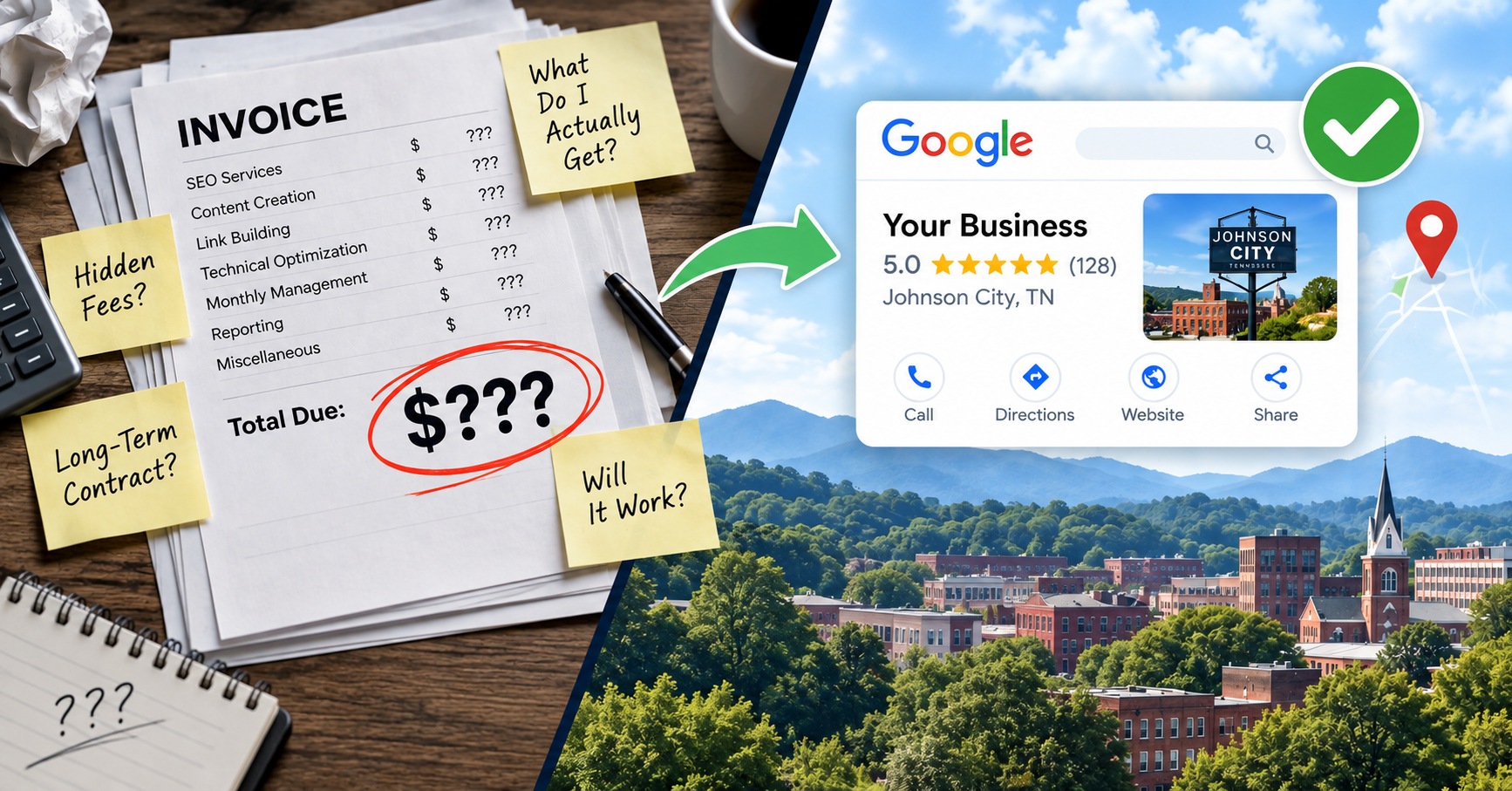
Many dental practices hire SEO agencies that deliver monthly reports showing improvements in organic keyword rankings and website traffic. Those metrics can look good on paper while your Map Pack ranking, which is where most new patients actually find you, stays flat or declines.
This happens because agency deliverables often default to what’s easiest to report: keyword rankings and traffic from organic search. Map Pack performance is harder to attribute cleanly and requires ongoing work that’s less scalable for agencies managing dozens of clients simultaneously.
When evaluating SEO work for your practice, ask specifically: what are you doing to improve our Google Business Profile ranking? How are you tracking our Map Pack position for key terms? What’s the strategy for review generation? If those questions get vague answers, the work may be producing metrics that look positive without addressing the ranking surface that actually drives new patient calls.
What a Realistic Timeline Looks Like
Map Pack ranking improvements don’t happen overnight, but they move faster than organic SEO improvements typically do, because the signals are more direct and more actionable.
A practice starting from a well-maintained but unoptimized baseline, decent review count but slow recent velocity, incomplete service listings, some citation inconsistencies, can typically see meaningful Map Pack movement within three to four months of addressing these factors systematically. Practices in less competitive markets sometimes see movement faster. Practices in dense urban markets with entrenched competitors may take six to nine months to break into the top three consistently.
The trajectory matters more than any single month’s position. Map Pack ranking fluctuates based on searcher location, search history, and algorithm updates. What you’re building toward is consistent presence in the top three for the searches that bring in new patients, which is a more stable and durable outcome than chasing a specific ranking on a specific date.
Where to Start
If you haven’t audited your Google Business Profile recently, that’s the first thing to do. Look at it the way a prospective patient would: is every service listed? Are the photos current? When was the last post? How recent is the most recent review, and did you respond to it?
From there, run a simple citation audit. Search your practice name and city, look at the top directory results, and check whether your name, address, and phone number are consistent across all of them. Inconsistencies are usually easy to fix and frequently overlooked.
Finally, look honestly at your review velocity. If you’re receiving fewer than two or three new reviews per month, you don’t have a systematic process for asking, and you need one.
These three things, a fully optimized and active Google Business Profile, consistent citations, and a steady flow of recent reviews, are the foundation that everything else in Johnson City dental SEO is built on. Get those right before worrying about anything else.
We work with dental practices across the Tri-Cities region and beyond on local SEO, Google Business Profile optimization, and the full range of digital marketing that drives new patient appointments. If you’d like an honest assessment of where your practice stands in local search, request a free analysis here.